How to Track Your Singing Progress
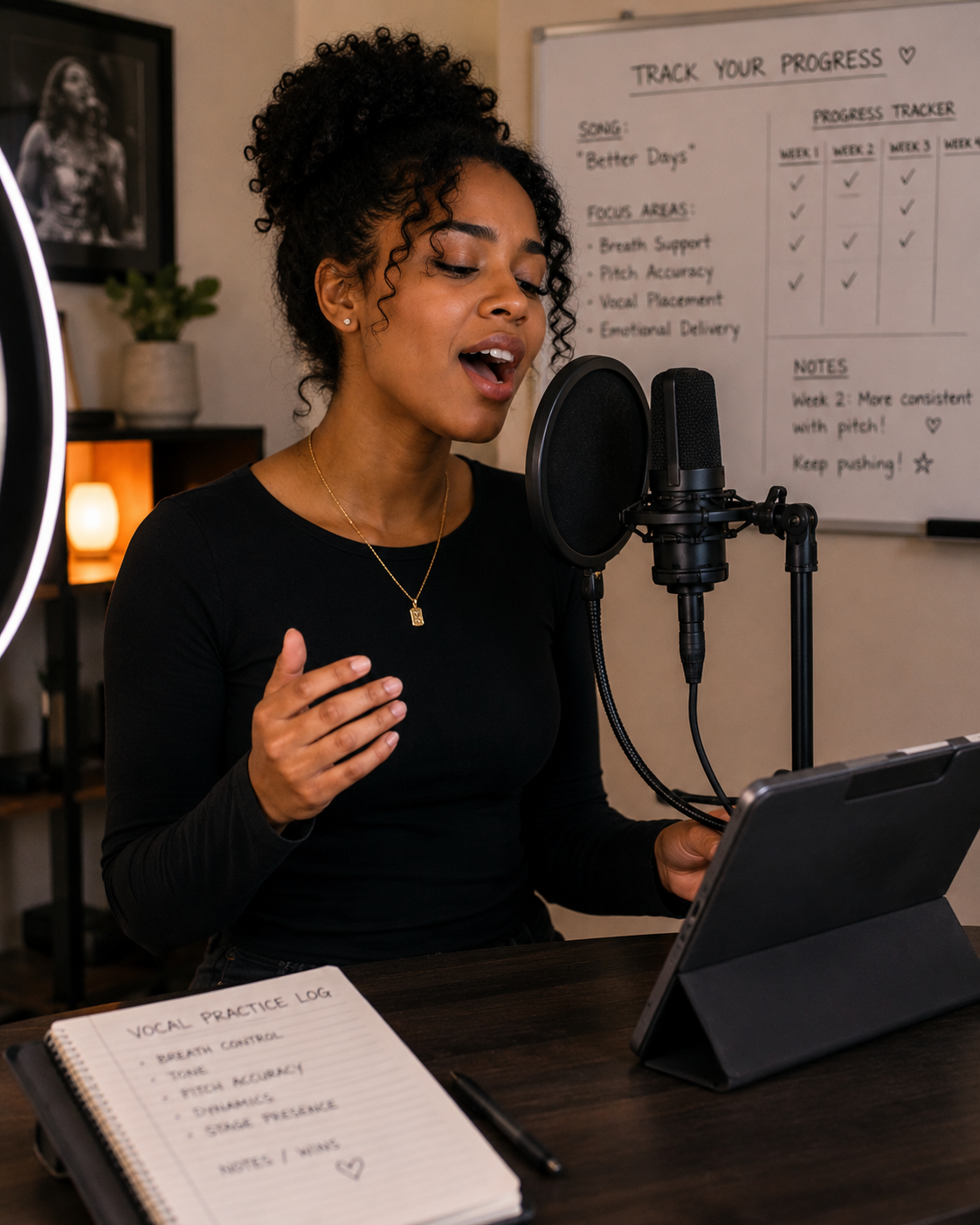
Improvement in singing doesn’t always feel obvious. Unlike some skills where results are easy to see, vocal growth often happens gradually. This is why learning how to track your singing progress is so important. When you have a way to measure your development, you can stay motivated, identify areas for improvement, and appreciate how far you’ve come.
Many singers become discouraged because they focus only on what still needs work. Tracking progress helps shift your attention toward growth rather than perfection.
Why Learning How to Track Your Singing Progress Matters
One of the biggest challenges singers face is recognizing improvement. Because you hear your own voice every day, gradual changes can be difficult to notice.
Understanding how to track your singing progress gives you a clearer picture of your development. It helps you see improvements in areas such as breath control, pitch accuracy, vocal stamina, confidence, and emotional expression.
When progress becomes visible, motivation becomes easier to maintain.
Use Recordings to Track Your Singing Progress
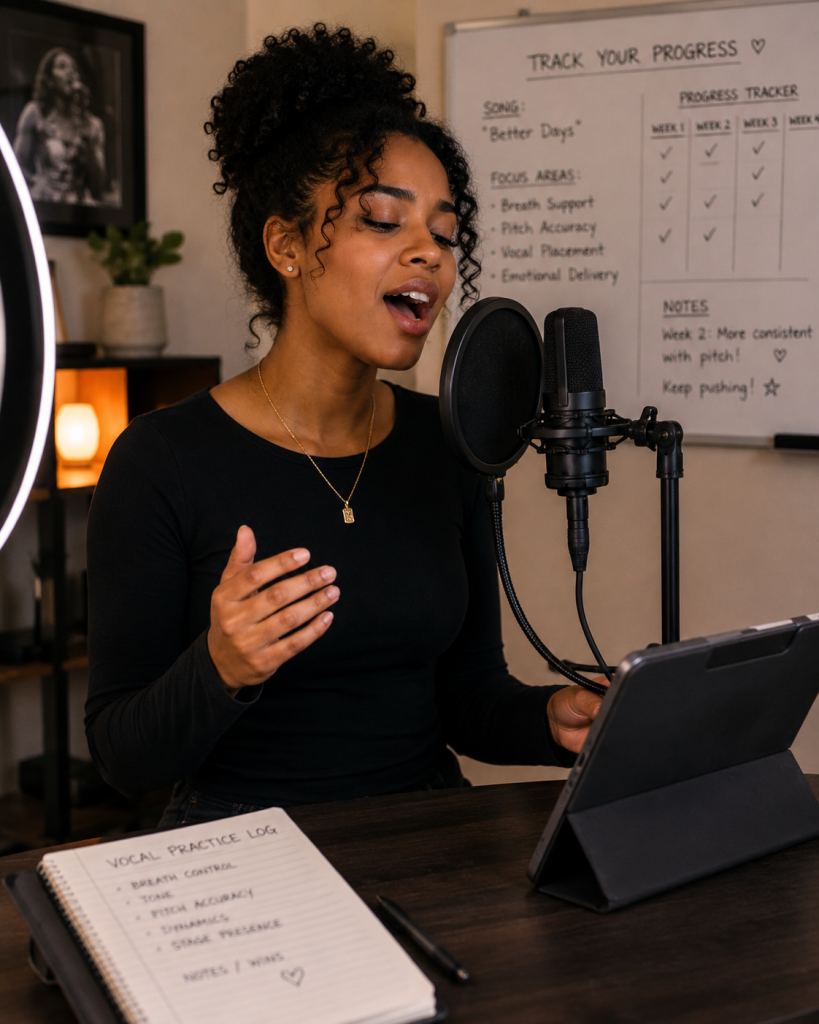
One of the most effective ways to monitor growth is by recording yourself regularly. Choose a song or exercise and record it every few weeks.
When you compare older recordings to newer ones, you’ll often notice improvements that weren’t obvious during daily practice. You may hear stronger tone, better control, improved phrasing, or increased confidence.
Recording yourself creates a valuable record of your vocal journey and provides clear evidence of progress over time.
Keep a Singing Journal
Another useful method for learning how to track your singing progress is keeping a simple journal. After practice sessions, write down what went well, what felt challenging, and what you want to improve next.
Over time, these notes reveal patterns and show how your skills are developing. They also help you stay focused on specific goals rather than vague expectations.
Track Small Wins, Not Just Big Milestones

Many singers only celebrate major achievements, such as performing on stage or mastering a difficult song. However, meaningful growth often happens through smaller improvements.
Notice things like easier breath support, smoother transitions between notes, greater vocal endurance, or increased confidence while singing. These small victories add up and often lead to larger breakthroughs.
Reviewing Your Singing Progress Regularly
Set aside time every month to reflect on your development. Listen to old recordings, review journal entries, and evaluate your goals.
Regular reflection helps you stay encouraged and reminds you that progress is often happening even when it feels slow.
Final Thoughts on How to Track Your Singing Progress
Learning how to track your singing progress allows you to see your growth more clearly and stay motivated throughout your vocal journey. By recording yourself, keeping notes, celebrating small wins, and reviewing your development regularly, you create a realistic picture of your improvement.
Remember, progress doesn’t always happen in dramatic leaps. Sometimes the most meaningful growth happens gradually—and tracking it helps you appreciate every step forward.